
About Adrian
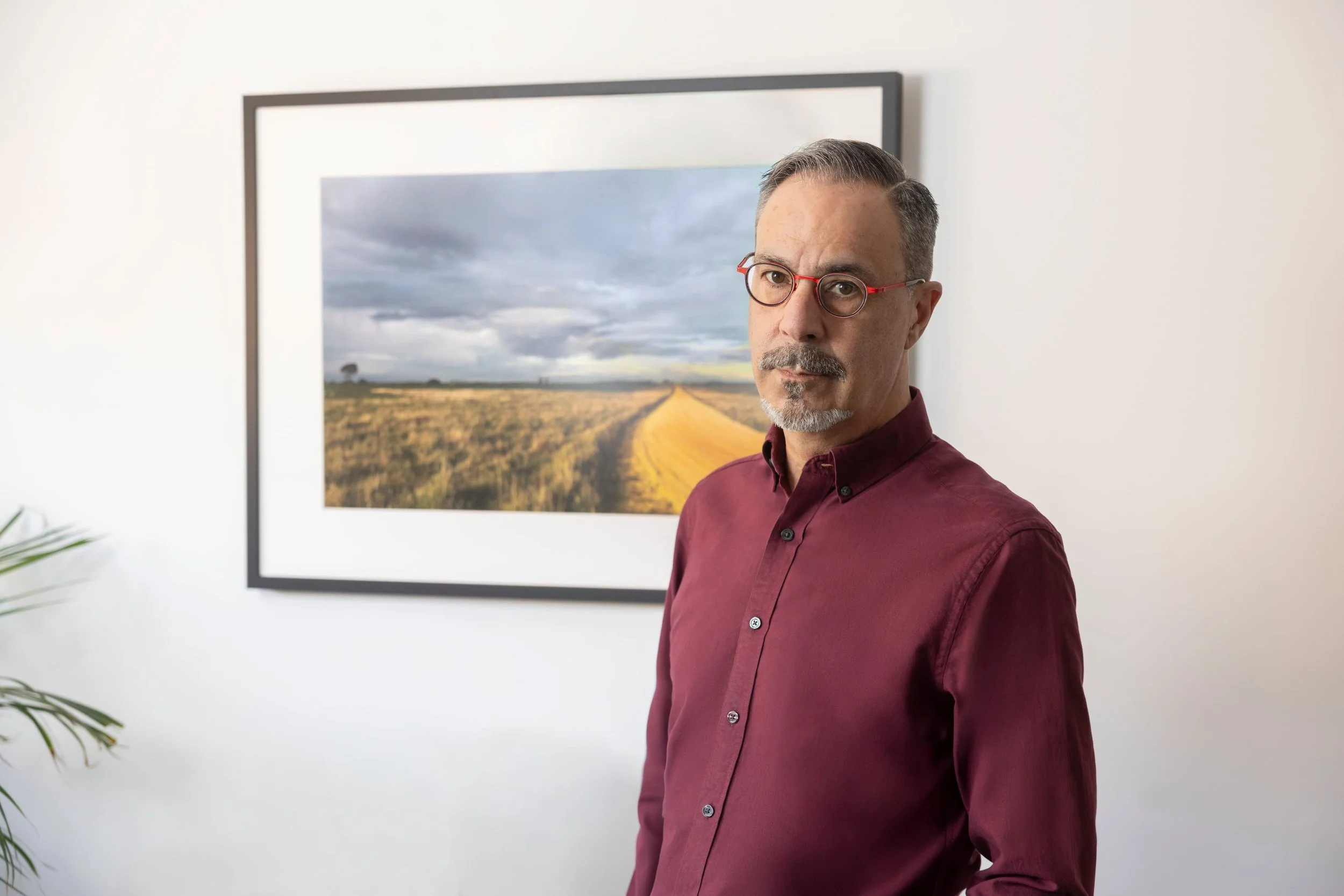
Adrian Workman — Clinical Counsellor
I've been doing this work for over 15 years. In that time I've sat with a lot of men — young men finding their footing, fathers navigating separation, men in their fifties trying to figure out what comes next, and everyone in between.
What I've learned is that most men don't need to be fixed. They need a space where they can think clearly, speak honestly, and work through what's actually going on — without performance, without judgement, and without being handed a script for how they're supposed to feel.
That's what I try to provide.
A Life Before the Counselling Room
I didn't arrive at this work in a straight line — and I think that matters.
I am of Ngāti Kahungunu descent — one of the largest iwi of Aotearoa New Zealand — and also carry strong Anglo heritage through English, Irish, and Scottish lineage. That dual heritage shapes how I understand identity, belonging, and the complexity of holding more than one cultural story at once. It also gives me a lived understanding of what it means to navigate between worlds — and what gets lost, and found, in that navigation.
I was raised by a single mum throughout my teens, left home at 16, and migrated to Australia at 18 years of age.
Through the 1980s and 1990s I was a touring and recording musician, part of the New Zealand post-punk and Australian indie pop scenes. Music was the language I used before I had the clinical one — for identity, for community, for making sense of things that didn't otherwise have words.
In the 1990s I founded Black Heart Music, releasing the debut recording of Tiddas — who went on to win an ARIA Award for Best Indigenous Record (1993). That work put me alongside communities navigating the intersection of culture, identity, creative expression, and systemic disadvantage — and it shaped how I understand the weight of belonging and the cost of its absence.
I've also worked as a public servant and events production manager. I'm still writing, recording, and performing music.
I tell you this not as a résumé, but because it's the life behind the work. When a client sits across from me talking about losing his sense of purpose, or a woman rebuilding her identity after years of someone else defining it — I'm not working from theory alone.
How I Work Clinically
My approach is practical and integrative — which means I don't work from a single method or model. I draw on a range of tools depending on what's useful for you: understanding the patterns underneath your behaviour, building concrete skills for managing pressure and emotion, and working through the bigger questions of identity and purpose when that's what the work calls for.
I'm genuinely curious about the people I work with. That curiosity drives the conversations we have — not toward a predetermined outcome, but toward a clearer picture of what's going on and what's possible.
Most clients find it straightforward to talk to me from the first session. I work in a way that's direct and grounded, and I'll tell you honestly what I'm seeing.
Cultural Background and Community Experience
My dual heritage shapes how I understand identity, whakapapa (geneology), belonging, and the weight of intergenerational experience — as well as the particular complexity of holding more than one cultural identity at once.
Across my life in music, community work, and clinical practice, I have worked alongside First Nations Australians, Māori, Pasifika, Middle Eastern, Latin American, Italian, Asian, and Greek communities. I understand that culture is not a backdrop to the work — it is often the work itself. Identity, family obligation, shame, belonging, and intergenerational expectation mean different things across different cultural contexts, and I work to understand those differences rather than flatten them.
If your cultural background is part of what you're carrying — or part of what you're working through — that's a legitimate and important part of our sessions.
In-Person and Online
I offer sessions both in-person and online, giving you the flexibility to access support in the way that works best for your life. Online sessions are conducted via secure video and are available to clients across Australia. In-person sessions are available in Sydney.
Who I Work With
I specialise in counselling for men and young men aged 16–65, and adult women in rebuilding phase. My focus areas include:
Post-separation and blended family stress
Life transitions — retirement, identity shifts, purpose and meaning
Anger and emotional regulation
Addictive behaviours as emotional coping
Late ADHD diagnosis and identity adjustment
Adolescent males — ADHD management, rejection sensitivity, family conflict, and harm reduction
Women — recovery and identity rebuilding after DV and childhood sexual abuse
I work with clients across neurotypes and cultural backgrounds. I am a registered counsellor with Victims Services NSW — eligible clients across all presentations may be able to access funded sessions through the scheme.
Qualifications and Training
Bachelor of Applied Social Science (Counselling), ACAP University College, Sydney
Men's Behaviour Change Practice (MBCP), No to Violence
Clinical Member, Psychotherapy and Counselling Federation of Australia (PACFA)
Level 4 Member, Australian Counselling Association (ACA)
Registered Counsellor, Victims Services NSW
Clinical Supervisor, College of Supervisors, Australian Counselling Association (ACA)wasrking